Optimizing Cooling Infrastructure for Large-Scale Cryptocurrency Mining Farms
Maximizing the cooling efficiency of a large cryptocurrency mining farm isn’t just about installing big fans or fancy chillers. It requires a carefully planned approach that balances hardware performance, energy consumption, and operational costs. Proper cooling can extend mining hardware lifespan, improve hash rates, and significantly reduce electricity bills. As mining farms grow bigger, the challenge of managing heat becomes more complex, but with the right strategies, you can keep your operation running smoothly and profitably.
Optimizing cooling in large crypto mining setups involves understanding hardware specifications, implementing effective airflow and liquid cooling solutions, and regularly maintaining your infrastructure to keep heat under control. These practices improve hardware performance, reduce costs, and extend equipment lifespan, making your farm more profitable and sustainable in the long run.
Efficient cooling is a cornerstone of successful large-scale cryptocurrency mining. As hardware becomes more powerful and densely packed, heat management strategies must evolve accordingly. Without proper cooling, miners risk hardware failures, reduced performance, and skyrocketing energy costs. Implementing tailored solutions that suit your farm’s size and location can dramatically enhance your operations. Let’s explore the key practices and technologies that drive cooling optimization for large mining farms.
Understanding hardware specifications and their thermal needs
Before choosing a cooling method, it’s essential to understand the specifications of your mining hardware. Different ASIC models, like the MicroBT Whatsminer series or Bitmain Antminers, have specific thermal thresholds and power densities. For example, high-performance units such as the Whatsminer M50 series operate best within certain temperature ranges to maintain efficiency and prolong lifespan.
Key hardware considerations include:
- Hashrate and power consumption: Higher hash rates often generate more heat.
- Maximum operating temperature: Exceeding this can cause hardware degradation.
- Cooling interface and airflow requirements: Some models are designed for specific cooling setups.
Knowing these details helps you tailor your cooling infrastructure to meet hardware demands effectively.
Building a cooling infrastructure for large-scale farms
Large mining farms require a comprehensive cooling plan that covers all aspects of heat management. Here are the core steps:
1. Assess your environment and layout
Evaluate the location’s climate, available space, and existing infrastructure. Hot climates may require more advanced cooling, while cooler environments can leverage natural ventilation. Proper facility layout ensures optimal airflow and access for maintenance.
2. Choose appropriate cooling techniques
There are several methods suitable for large farms:
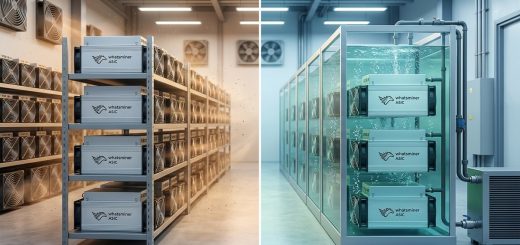
- Air cooling: Using industrial fans, ventilation, and ducting. Cost-effective but less efficient in high-density setups.
- Liquid cooling: Employing water or glycol-based systems that transfer heat more effectively. Can be immersion or direct-to-chip cooling.
- Hybrid systems: Combining air and liquid cooling for optimized performance.
3. Implement airflow management
Good airflow design prevents hot spots and recirculation. Use cold aisles and hot aisles to separate intake and exhaust air. Proper placement of fans and vents enhances cooling efficiency.
4. Install temperature monitoring and automation
Sensors placed throughout the farm track temperature and humidity. Automated controls adjust fan speeds and coolant flow, maintaining ideal conditions. This prevents overheating and reduces energy waste.
5. Regular maintenance and upgrades
Cleaning filters, checking coolant levels, and updating firmware of cooling equipment keeps systems operating at peak efficiency.
Practical cooling optimization techniques and common pitfalls
Here are some effective techniques and mistakes to avoid:
| Technique | Mistake to Avoid |
|---|---|
| Use high-efficiency fans with variable speed drives | Relying solely on fixed-speed fans that waste energy |
| Install liquid cooling systems for high-density racks | Ignoring the need for proper insulation and leak prevention |
| Optimize airflow paths with containment barriers | Blocking vents or creating uneven airflow patterns |
| Employ ambient air cooling where climate permits | Underestimating the impact of external weather on cooling costs |
| Regularly calibrate sensors and control systems | Neglecting maintenance, leading to sensor drift and inefficiency |
Expert advice: “The key to effective cooling is not just equipment but smart system design. Proper airflow management and continuous monitoring can save you a lot of energy and hardware headaches.”
Common mistakes include:
- Overcooling or undercooling due to poor sensor calibration.
- Using inadequate insulation leading to condensation risks.
- Ignoring local climate variations which affect cooling costs.
- Failing to plan for future expansion, making upgrades costly.
Cost-effective cooling strategies for large farms
Balancing upfront costs with long-term savings is vital. Here are some strategies:
- Leverage natural cooling: Situate farms in cooler climates or at higher elevations. Use shade and passive ventilation to reduce active cooling needs.
- Implement heat reuse: Use waste heat for other purposes like heating nearby facilities or greenhouses.
- Invest in energy-efficient hardware: Hardware designed for better thermal performance reduces cooling loads.
- Adopt immersion cooling selectively: For dense racks, immersion systems can significantly cut energy use, but initial costs are higher.
Do not overlook:
- The importance of proper insulation and sealing.
- The potential for demand response programs to lower electricity costs during peak times.
- The value of phased upgrades to avoid massive capital expenditures.
Comparing cooling techniques and avoiding common pitfalls
Here’s a quick comparison to help you choose the right approach:
| Technique | Pros | Cons | Common mistake avoided |
|---|---|---|---|
| Air cooling | Low initial cost, simple | Less effective at high densities | Underestimating airflow requirements |
| Liquid cooling | High efficiency, scalable | Higher initial investment | Neglecting leak detection systems |
| Immersion cooling | Excellent thermal management | Costly setup, complex maintenance | Overlooking site-specific needs |
| Hybrid systems | Flexibility | Increased complexity | Relying on only one method without assessment |
Monitoring, maintenance, and continuous improvement
Effective cooling isn’t a set-and-forget task. Regularly check system performance and make adjustments as your farm expands or external conditions change. Use data analytics to identify inefficiencies and plan upgrades.
“Consistent monitoring and proactive maintenance are the backbone of successful cooling optimization. Investing in good sensors and automation pays off over time.”
Practical tips:
- Schedule routine inspections.
- Keep spare parts on hand for quick repairs.
- Track temperature and energy consumption trends.
- Reassess your cooling setup annually or after significant changes.
Final thoughts: keeping your farm cool and profitable
Cooling optimization in large cryptocurrency mining farms is an ongoing process. It involves understanding hardware, designing tailored infrastructure, and maintaining systems diligently. Small improvements in airflow, cooling techniques, or monitoring can lead to substantial savings and better hardware performance.
By assessing your environment, choosing suitable cooling methods, and staying vigilant with maintenance, you can ensure your farm runs efficiently. This not only extends hardware life but also preserves your bottom line amid fluctuating energy prices and evolving technology.
Remember, the right cooling approach is unique to your farm’s size and location. Take the time to evaluate your needs carefully, and don’t hesitate to experiment with hybrid solutions. Your effort in optimizing cooling today sets the foundation for a more profitable and sustainable mining operation tomorrow.