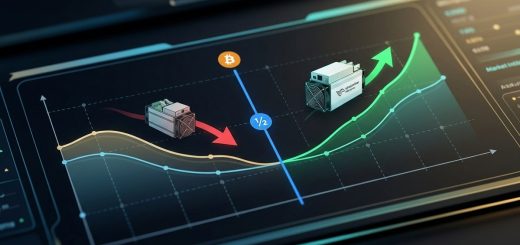
Why Bitcoin Mining Difficulty Just Hit an All-Time High and What It Means for Your Profits
Bitcoin mining difficulty just smashed through another ceiling, reaching an unprecedented 136 trillion. If you’re running mining rigs or thinking about getting into the game, this number directly impacts your bottom line. Higher difficulty means your hardware has to work harder to solve the same mathematical puzzles, which translates to fewer bitcoin rewards for the same amount of electricity and effort.
Bitcoin mining difficulty reached an all time high of 136 trillion, making it harder than ever to mine new blocks. This increase squeezes profit margins for miners using older equipment while favoring operations with efficient [ASIC](https://en.wikipedia.org/wiki/Application-specific_integrated_circuit)s and cheap electricity. Understanding how difficulty adjustments work helps you make smarter decisions about hardware upgrades, energy costs, and whether mining remains profitable for your specific setup.
What Bitcoin Mining Difficulty Actually Measures
Mining difficulty represents how hard it is to find a valid block hash on the Bitcoin network. Think of it like a lottery where the network automatically adjusts how many tickets you need to buy to have a winning chance.
The Bitcoin protocol recalculates difficulty every 2,016 blocks, roughly every two weeks. This adjustment keeps block times averaging around 10 minutes, regardless of how many miners join or leave the network.
When difficulty sits at 136 trillion, your mining hardware needs to perform 136 trillion hash calculations on average to find one valid block. That’s a massive computational challenge.
The adjustment mechanism is beautifully simple. If blocks came faster than 10 minutes during the last period, difficulty goes up. If blocks came slower, difficulty drops. This self-regulating system has kept Bitcoin humming since 2009.
Why Difficulty Keeps Climbing to New Records
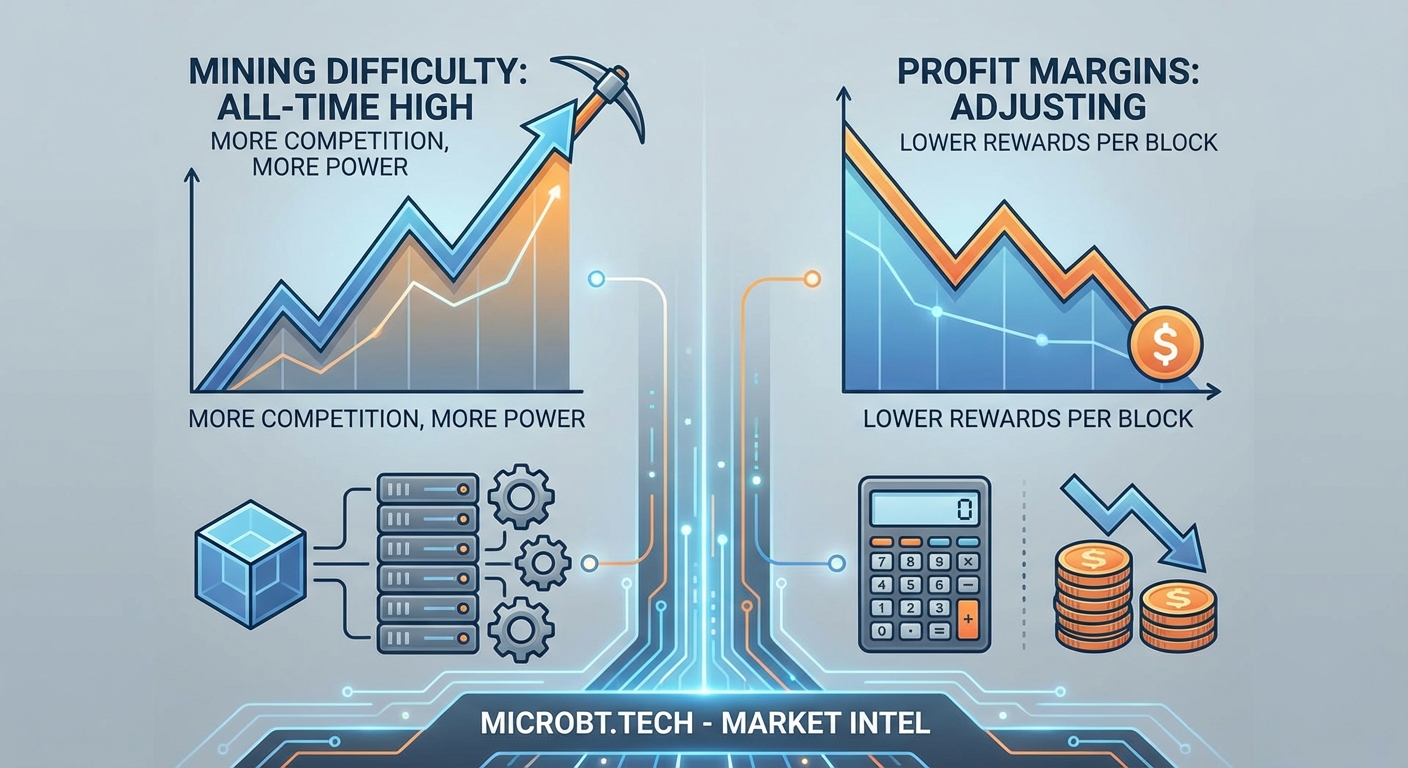
Three main forces push difficulty higher over time:
More miners joining the network. When Bitcoin prices rally, mining becomes more attractive. New operations fire up, adding hashrate to the network. More hashrate means blocks get found faster, triggering a difficulty increase at the next adjustment.
Better mining hardware. ASIC manufacturers keep releasing more efficient machines. A modern miner can deliver 3-5 times the hashrate of models from just three years ago. As operators upgrade their fleets, total network hashrate climbs even if the number of individual miners stays flat.
Institutional mining farms. Large-scale operations with access to cheap electricity and bulk hardware pricing have entered the space. These facilities run thousands of machines in climate-controlled warehouses, adding enormous hashrate that individual miners can’t match.
The current all time high reflects all three trends converging. Bitcoin’s price has remained relatively strong, giving miners confidence to invest in new equipment. Meanwhile, the latest generation ASICs deliver unprecedented efficiency, and institutional players continue expanding their operations.
How Rising Difficulty Affects Your Mining Profits
Let’s get practical about what this means for your wallet.
Your daily bitcoin earnings depend on your hashrate as a percentage of total network hashrate. When difficulty increases, you’re competing against more computational power for the same block rewards.
Here’s a concrete example. Suppose you run a mining rig producing 100 TH/s (terahashes per second). Six months ago, that might have earned you 0.0005 BTC per day. Today, with difficulty 20% higher, that same rig might only earn 0.00042 BTC daily, assuming network hashrate grew proportionally.
Your electricity costs stay the same, but your bitcoin production drops. This squeeze hits hardest if you’re running older equipment with lower efficiency ratings.
“The miners who survive rising difficulty are those who constantly optimize their operations. You need cheap power, efficient hardware, and the discipline to upgrade when your machines fall behind the efficiency curve.” — Mining farm operator with 5+ years experience
Profitability calculations become crucial. You need to track these metrics:
- Your hashrate output
- Current difficulty level
- Bitcoin price
- Electricity cost per kWh
- Hardware efficiency (watts per terahash)
When difficulty rises 10% but Bitcoin price also climbs 15%, you might still come out ahead. But if difficulty jumps while prices stagnate or drop, margins evaporate fast.
The Numbers Behind the Latest Difficulty Jump
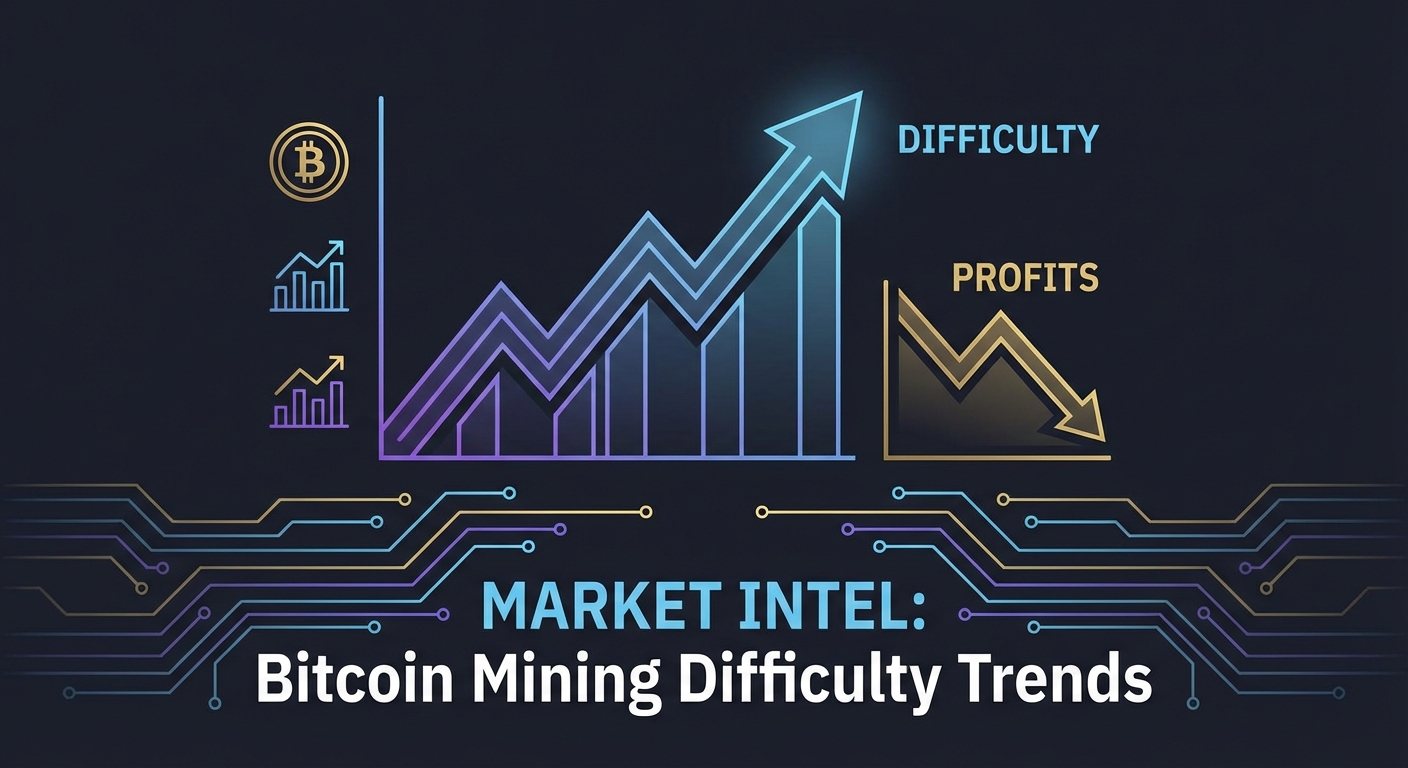
Let’s break down the recent adjustment that pushed difficulty to its all time high.
| Metric | Previous Period | Current Period | Change |
|---|---|---|---|
| Difficulty | 131.5 trillion | 136.0 trillion | +3.4% |
| Network Hashrate | ~940 EH/s | ~970 EH/s | +3.2% |
| Average Block Time | 9.8 minutes | 10.1 minutes | Normalized |
The 3.4% increase might not sound dramatic, but it compounds with previous adjustments. Difficulty has climbed over 40% in the past year alone.
Network hashrate approaching 1 exahash per second (that’s 1,000,000,000,000,000,000 hashes every second) shows just how much computational power secures Bitcoin. This massive hashrate makes the network incredibly secure against attacks, but it also makes mining intensely competitive.
Block times normalized back to around 10 minutes after the adjustment, exactly as designed. The protocol worked perfectly to maintain Bitcoin’s predictable issuance schedule.
Which Miners Get Squeezed Out
Not all mining operations feel difficulty increases equally. Here’s who struggles most:
Operators with expensive electricity. If you’re paying more than $0.08 per kWh, you’re already fighting an uphill battle. When difficulty climbs, high electricity costs become unsustainable. Many miners in regions with expensive power have already shut down.
Owners of older generation ASICs. Machines from 2020 or earlier typically can’t compete anymore. Their lower hashrate and higher power consumption mean they lose money at current difficulty levels unless you have nearly free electricity.
Small-scale hobby miners. Running a single ASIC in your garage made sense when difficulty was lower. Today, the thin margins mean you need economies of scale to stay profitable. Hosting fees, cooling costs, and maintenance eat into returns that are already shrinking.
Operations without upgrade budgets. Mining requires constant reinvestment. If you can’t afford to replace aging hardware every 2-3 years, you’ll fall behind competitors running the latest efficient models.
The harsh reality is that mining has become an industrial operation. The days of profitable basement mining are mostly over, replaced by warehouse-scale facilities optimized for efficiency.
Steps to Stay Profitable Despite Higher Difficulty
If you’re committed to mining, here’s how to adapt:
-
Calculate your true break-even point. Factor in all costs including electricity, cooling, internet, maintenance, and hardware depreciation. Know exactly what Bitcoin price and difficulty level you need to stay profitable.
-
Negotiate better electricity rates. This is often your biggest expense. Look into industrial power contracts, renewable energy sources, or relocating to regions with cheaper power. Some miners have moved operations to areas with hydro power costing under $0.04 per kWh.
-
Upgrade to efficient hardware. Modern ASICs use 30-40% less electricity per terahash than older models. The upfront cost hurts, but the improved efficiency pays off over 12-18 months if difficulty continues rising.
-
Join a reliable mining pool. Solo mining at current difficulty levels means you might go months without finding a block. Pools provide steady, predictable payouts based on your contributed hashrate.
-
Monitor difficulty trends. Watch for adjustment patterns. If difficulty has jumped 15% over three adjustments, factor that trend into your projections. Don’t assume difficulty will stay flat.
-
Consider hosting services. If home electricity is expensive, professional hosting facilities offer bulk power rates and optimal cooling. Yes, you pay a monthly fee, but it might cost less than running equipment at home.
Understanding the Difficulty Adjustment Mechanism
The technical details matter if you want to predict future changes.
Bitcoin’s difficulty adjustment uses this formula: New Difficulty = Old Difficulty × (20,160 minutes / Actual Time for Last 2,016 Blocks).
The 20,160 minutes represents the target time (2,016 blocks × 10 minutes). If the last 2,016 blocks took only 19,000 minutes, difficulty increases proportionally to slow things back down.
The protocol caps adjustments at 4x in either direction per period. This prevents wild swings if hashrate suddenly doubles or halves. In practice, adjustments typically range from 1-8% up or down.
You can predict the next adjustment by watching current block times. If blocks are averaging 9.5 minutes, expect difficulty to rise about 5% at the next adjustment. If they’re averaging 10.5 minutes, difficulty will likely drop around 5%.
Several websites track this in real time, showing estimated difficulty changes based on recent block intervals. These predictions become more accurate as you get closer to the 2,016 block mark.
What All Time High Difficulty Means for Network Security
Higher difficulty has a silver lining: it makes Bitcoin more secure.
The computational power required to attack Bitcoin grows proportionally with difficulty. At 136 trillion difficulty, an attacker would need to control more hashrate than all current miners combined to execute a 51% attack.
That’s not just expensive, it’s practically impossible. The hardware doesn’t exist in sufficient quantities, and acquiring it would take years and billions of dollars. Even nation-states would struggle to mount such an attack.
This security comes from mining difficulty making the network expensive to attack. Each block represents real-world energy expenditure that can’t be faked or shortcut. The higher the difficulty, the more expensive each block becomes to produce.
For Bitcoin holders and users, rising difficulty confirms the network’s strength. Your transactions are protected by more computational power than ever before. The economic incentives keeping miners honest grow stronger as more resources flow into mining.
Common Mistakes When Responding to Difficulty Increases
Avoid these traps that catch inexperienced miners:
Panic selling hardware during temporary dips. Difficulty doesn’t only go up. When Bitcoin prices drop sharply, some miners shut down, causing difficulty to decrease at the next adjustment. Selling your equipment during a rough patch means you miss the recovery.
Ignoring total cost of ownership. That cheap used ASIC might seem like a bargain, but if it consumes twice the power of a newer model, you’ll lose money over time. Always calculate electricity costs over the machine’s expected lifespan.
Failing to account for halvings. Bitcoin’s block reward halves approximately every four years. The next halving cuts mining revenue by 50% overnight. If you’re barely profitable now, you definitely won’t be after a halving unless Bitcoin price doubles or you drastically cut costs.
Overestimating your edge. Unless you have access to electricity under $0.05 per kWh or connections to buy hardware at wholesale prices, you’re competing on an uneven playing field against industrial operations. Be realistic about your competitive position.
The Relationship Between Price and Difficulty
Bitcoin price and mining difficulty dance together in a complex feedback loop.
When Bitcoin prices surge, mining becomes more profitable. This attracts new miners and encourages existing operators to expand. The influx of hashrate pushes difficulty higher at the next adjustment.
Eventually, difficulty rises enough that marginal miners (those with the highest costs) start losing money. Some shut down, reducing total hashrate. If enough miners exit, difficulty decreases, making mining profitable again for those who remained.
This self-balancing mechanism keeps mining competitive but not impossible. The network naturally finds an equilibrium where mining is marginally profitable for the most efficient operations.
Here’s the catch: difficulty adjusts every two weeks, but Bitcoin price changes every second. A miner who invested heavily during a price peak might find themselves underwater if prices crash before difficulty adjusts downward.
The all time high difficulty we’re seeing now reflects strong Bitcoin prices over recent months. If prices were to drop 30% and stay there, we’d likely see difficulty decline over subsequent adjustments as unprofitable miners shut down.
Future Outlook for Mining Difficulty
Where does difficulty go from here?
Several factors will shape the trajectory:
-
Bitcoin price trends. If prices continue climbing toward previous all time highs, expect difficulty to follow. Higher prices justify more investment in mining infrastructure.
-
Energy costs globally. Rising electricity prices in key mining regions could force some operations offline, potentially stabilizing or reducing difficulty.
-
Hardware innovation. The next generation of ASICs will be more efficient, but the improvement curve is flattening. We’re approaching physical limits of silicon-based chips.
-
Regulatory changes. Government crackdowns in certain countries have forced miners to relocate or shut down. Future regulations could significantly impact global hashrate.
-
Halving events. The next Bitcoin halving will cut block rewards in half. This typically causes a temporary exodus of miners, dropping difficulty until price adjusts upward.
Most analysts expect difficulty to continue trending upward over the long term, punctuated by temporary decreases during bear markets or after halvings. The all time high we’re seeing now probably won’t be the last.
Alternative Strategies When Difficulty Gets Too High
If traditional mining no longer makes sense for your situation, consider these options:
Cloud mining contracts. You pay a company to mine on your behalf using their equipment and electricity. Returns are typically lower than owning hardware, but you avoid the operational headaches. Be cautious of scams in this space.
Mining altcoins. Some cryptocurrencies use different mining algorithms where competition is less intense. You might earn better returns mining Litecoin or other coins, though they carry different price risks than Bitcoin.
Staking instead of mining. Proof-of-stake cryptocurrencies let you earn rewards by locking up coins rather than running mining hardware. No electricity costs, no hardware maintenance, but you need capital to stake.
Investing directly in Bitcoin. Sometimes the smartest move is admitting that buying Bitcoin outright gives you better risk-adjusted returns than mining. Run the numbers honestly.
Why This All Time High Matters for the Bitcoin Ecosystem
The record difficulty level signals several important trends.
Bitcoin mining has matured into a serious industry. The hobbyist era has ended, replaced by professional operations with sophisticated infrastructure. This professionalization strengthens the network but changes who participates.
The environmental conversation around Bitcoin mining is shifting. High difficulty means miners must be extremely efficient to survive. This creates economic pressure to find the cheapest electricity, which increasingly means renewable sources like hydro, wind, and solar. Miners are becoming major customers for stranded renewable energy that would otherwise go to waste.
Geographic distribution of mining continues evolving. After China’s mining ban, hashrate dispersed to North America, Kazakhstan, and other regions. The current all time high difficulty shows the network successfully adapted and even grew stronger after losing its largest mining region.
For everyday Bitcoin users, rising difficulty is mostly positive. It confirms the network’s security and decentralization. The fact that difficulty keeps climbing despite regulatory pressure and market volatility demonstrates Bitcoin’s resilience.
Making Smart Decisions in a High Difficulty Environment
Mining at record difficulty levels demands careful analysis and realistic expectations.
Start by calculating your all-in costs per Bitcoin mined. Include every expense: hardware purchase or lease, electricity, cooling, internet, maintenance, pool fees, and your time. Compare this to simply buying Bitcoin at current market prices.
If mining costs you $45,000 per Bitcoin and the market price is $65,000, you’re ahead. But if your costs are $70,000 per Bitcoin, you’re burning money. Be brutally honest with these calculations.
Factor in difficulty trends. If difficulty has climbed 30% over six months, assume it will continue rising unless you see clear evidence otherwise. Your mining returns will decrease over time unless Bitcoin price rises faster than difficulty.
Consider your competitive advantages. Do you have access to electricity under $0.04 per kWh? Can you buy hardware at wholesale prices? Do you have technical expertise to maintain equipment yourself? Without at least one significant advantage, you’re fighting an uphill battle against industrial miners.
Think about your time horizon. Mining is a multi-year commitment. Hardware depreciates, difficulty fluctuates, and prices swing wildly. If you need profits next quarter, mining probably isn’t for you. But if you can weather volatility and reinvest profits into better equipment, mining can work.
Your electricity rate matters more than almost anything else. A miner with $0.03 per kWh power can profit where someone paying $0.10 per kWh loses money, even running identical hardware. If you can’t secure competitive power rates, reconsider whether mining makes sense.
The bitcoin mining difficulty all time high represents both a challenge and an opportunity. It squeezes out inefficient operations while rewarding those who optimize relentlessly. Understanding how difficulty works and honestly assessing your competitive position helps you make smarter decisions about whether to mine, when to upgrade equipment, and when to exit the game. The miners who thrive in this environment are those who treat it as a business, not a hobby, and constantly adapt to changing conditions.