Which Whatsminer Model Delivers the Best Hashrate Per Watt in 2026?
Choosing the right Bitcoin miner in 2024 can make or break your profitability. With electricity costs climbing and network difficulty at all-time highs, efficiency matters more than raw hashrate. The difference between a well-chosen ASIC and a mediocre one could mean thousands of dollars in annual profit or loss.
The best bitcoin miner 2024 depends on your electricity costs and budget. High-efficiency models like the Antminer S21 Pro and Whatsminer M60S deliver superior performance per watt, while mid-tier options like the S19 XP offer better upfront value. Calculate your local power costs before buying to ensure positive returns in current market conditions.
Understanding Bitcoin Mining Hardware in 2024
Bitcoin mining has changed dramatically since the early days of GPU rigs. Today’s landscape is dominated by application-specific integrated circuits (ASICs) designed exclusively for SHA-256 mining.
These machines compete on three primary metrics: hashrate, power efficiency, and upfront cost. A miner producing 200 TH/s at 3,000 watts performs very differently than one delivering 150 TH/s at 1,800 watts.
The relationship between these numbers determines your daily profitability. Higher hashrate means more chances to solve blocks. Lower power consumption means smaller electric bills. The sweet spot varies based on your local electricity rate.
Most home miners pay between $0.08 and $0.15 per kilowatt-hour. Industrial operations often secure rates below $0.06. This difference completely changes which hardware makes financial sense.
Top Bitcoin Mining ASICs for 2024
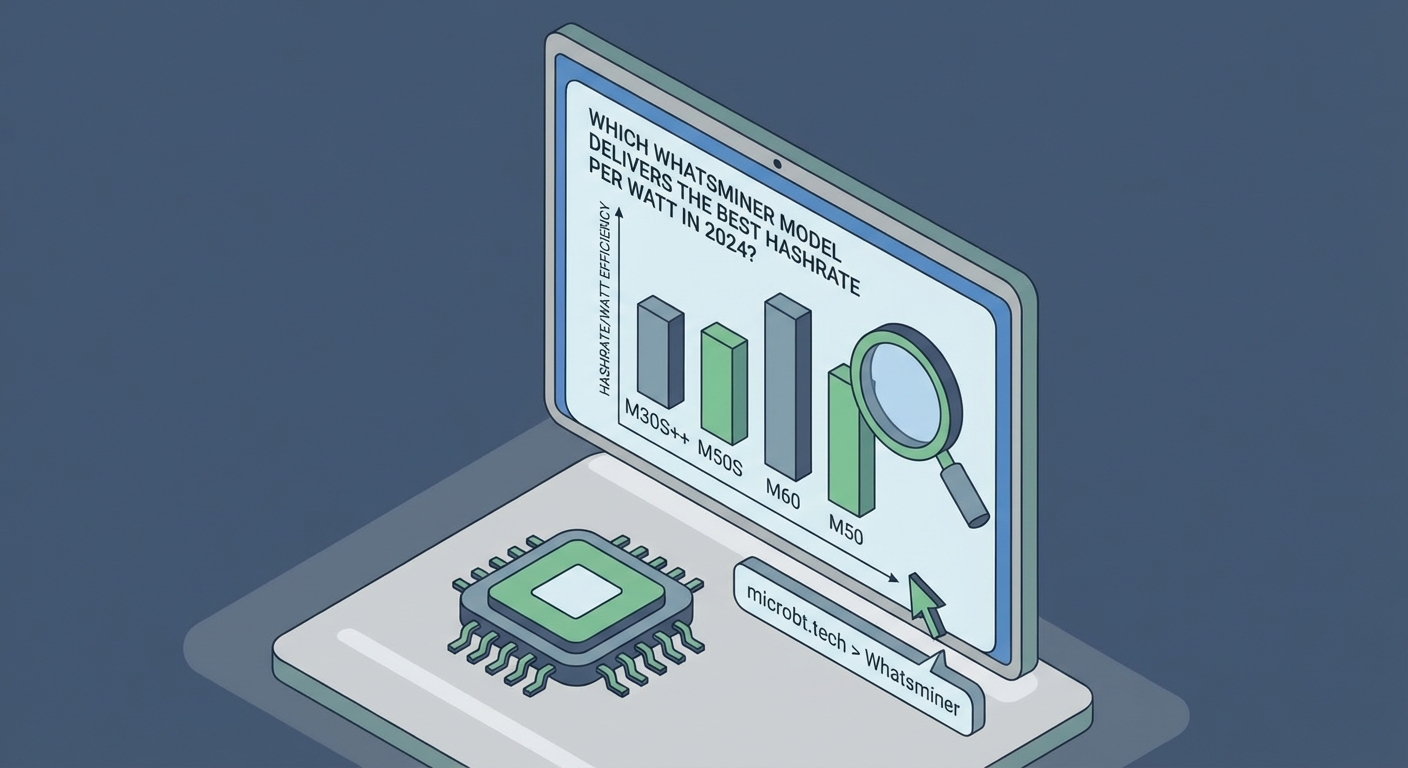
The current generation of miners represents a significant leap in efficiency compared to 2022 models. Here are the standouts worth considering.
Bitmain Antminer S21 Pro
The S21 Pro delivers 234 TH/s while consuming 3,510 watts, giving it an efficiency of 15 J/TH. This represents one of the best power-to-performance ratios available.
Retail pricing hovers around $5,800 to $6,500 depending on supplier and shipping. At $0.10 per kWh and current Bitcoin prices, expect roughly $8 to $12 in daily profit after electricity costs.
The unit runs hot and loud, requiring dedicated ventilation. Plan for 60-70 decibels during operation, similar to a vacuum cleaner running constantly.
MicroBT Whatsminer M60S
MicroBT’s flagship model pushes 172 TH/s at 3,344 watts, achieving approximately 19.4 J/TH efficiency. While slightly less efficient than the S21 Pro, it costs $1,000 to $1,500 less.
This makes it attractive for miners with lower electricity rates who want to maximize hashrate per dollar invested rather than per watt consumed.
Build quality tends to be excellent. These units have proven reliable in large-scale deployments, with failure rates comparable to Bitmain’s offerings.
Bitmain Antminer S19 XP
The S19 XP represents the previous generation but remains competitive. It produces 140 TH/s at 3,010 watts, translating to 21.5 J/TH.
You can find these units for $3,200 to $4,000 on the secondary market. For miners with electricity costs below $0.08 per kWh, the lower upfront investment can mean faster ROI than newer models.
Firmware options are mature and well-documented. Third-party firmware like Braiins OS can sometimes improve efficiency by 2-5%.
Canaan Avalon A1466
Canaan’s A1466 delivers 150 TH/s at 3,400 watts, giving it roughly 22.7 J/TH efficiency. It sits in the middle tier for both performance and price.
The main advantage here is availability. When Bitmain and MicroBT face supply constraints, Canaan often has stock ready to ship.
Resale value tends to be lower than equivalent Bitmain models. Factor this in if you plan to upgrade within 18-24 months.
Calculating Your Real Profitability
Raw specifications only tell part of the story. Your actual returns depend on several variables that change constantly.
Here’s how to calculate expected daily profit:
- Find your miner’s hashrate in TH/s
- Multiply by current Bitcoin network block reward per TH/s (check mining calculators)
- Convert BTC earned to your local currency
- Subtract daily electricity cost (watts ÷ 1000 × 24 hours × your rate per kWh)
“Most new miners underestimate how much electricity costs eat into profits. At $0.12 per kWh, a 3,000-watt miner costs $8.64 daily just to run. That’s $3,153 per year before you’ve earned a single satoshi.”
Network difficulty adjusts every 2,016 blocks, roughly every two weeks. When more miners join, difficulty increases and your share of rewards decreases. When miners drop off, you earn more per TH/s.
Bitcoin’s price volatility adds another layer of complexity. A miner profitable at $45,000 per BTC might lose money at $35,000 with the same difficulty level.
Efficiency Comparison Table
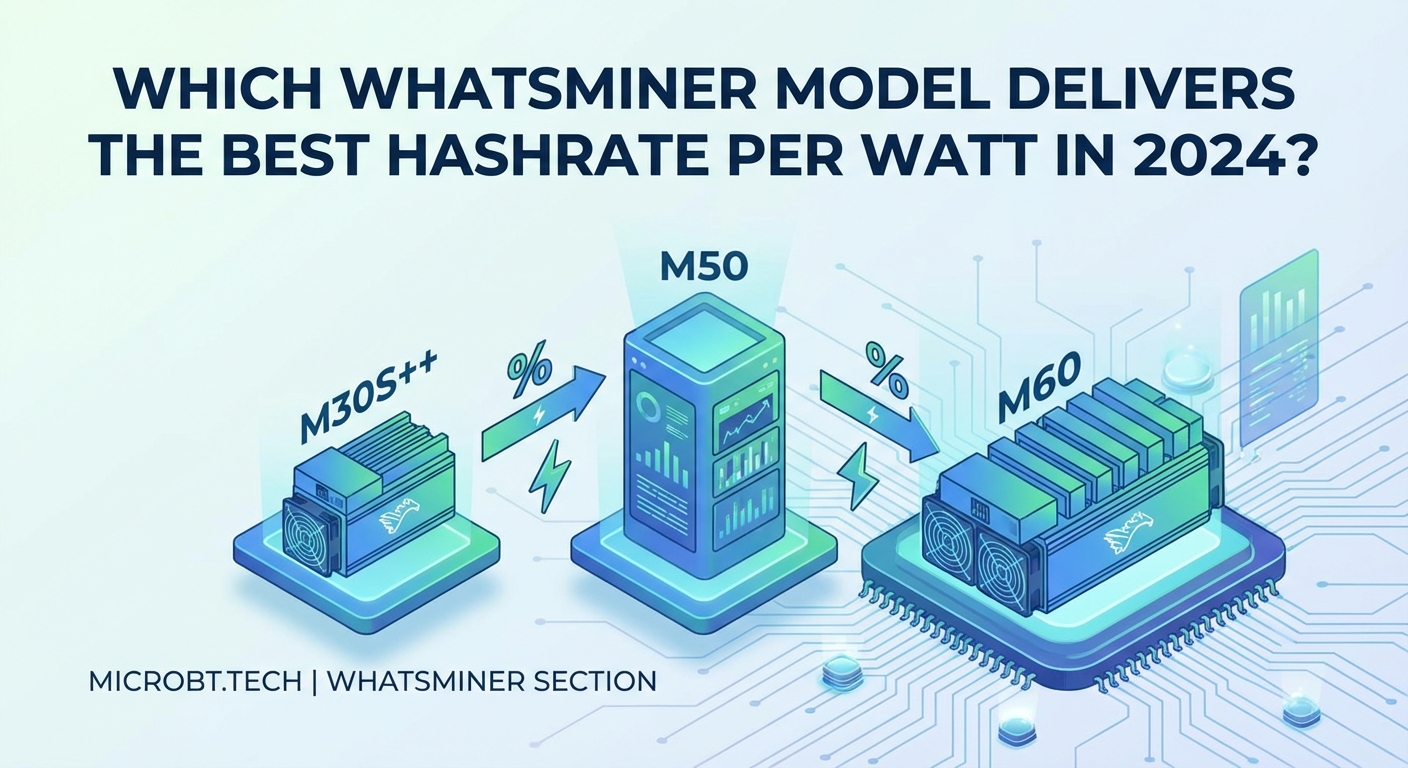
| Model | Hashrate (TH/s) | Power (W) | Efficiency (J/TH) | Approximate Cost |
|---|---|---|---|---|
| Antminer S21 Pro | 234 | 3,510 | 15.0 | $5,800-$6,500 |
| Whatsminer M60S | 172 | 3,344 | 19.4 | $4,500-$5,200 |
| Antminer S19 XP | 140 | 3,010 | 21.5 | $3,200-$4,000 |
| Canaan A1466 | 150 | 3,400 | 22.7 | $3,800-$4,500 |
| Whatsminer M50S | 126 | 3,276 | 26.0 | $2,800-$3,400 |
The efficiency gap between top-tier and mid-tier models might seem small, but it compounds over months. A 6 J/TH difference on a 150 TH/s miner means 900 extra watts, or $63 monthly at $0.10 per kWh.
Key Factors Beyond Specifications
Buying the most efficient miner doesn’t guarantee success. Several practical considerations matter just as much.
Shipping and import costs can add 10-20% to your purchase price. A $5,000 miner might cost $6,000 after international shipping, customs duties, and handling fees.
Warranty terms vary significantly. Bitmain typically offers 180 days. Some resellers provide extended coverage for an additional fee. Read the fine print about what voids coverage.
Noise levels make home mining challenging. Most modern ASICs exceed 70 decibels. You’ll need a garage, basement, or dedicated space with sound insulation.
Heat output equals power consumption. A 3,500-watt miner produces the same heat as a small space heater running continuously. Summer months may require additional cooling.
Resale value depends heavily on brand. Bitmain units typically hold value better than competitors. A two-year-old Antminer might sell for 40-50% of original price, while other brands drop to 30%.
Common Mistakes to Avoid
New miners often make predictable errors that hurt profitability. Here are the most frequent pitfalls.
-
Ignoring electricity infrastructure: A single 3,500-watt miner on a standard 15-amp circuit will trip breakers. You need dedicated 20-amp circuits, possibly 240V wiring.
-
Overlooking cooling requirements: Miners throttle performance when ambient temperature exceeds 95°F. Summer heat can reduce hashrate by 10-15% without proper ventilation.
-
Buying during bull markets: ASIC prices spike when Bitcoin rallies. Miners purchased at peak hype often never achieve ROI when prices normalize.
-
Underestimating noise: “I’ll just put it in the spare bedroom” never works. These machines are industrial equipment, not consumer electronics.
-
Skipping the math: Emotional purchases based on FOMO rarely work out. Calculate breakeven time assuming Bitcoin price drops 30% and difficulty increases 20%.
Where to Buy Mining Hardware
Purchasing from reputable sources protects you from scams and ensures warranty coverage.
Manufacturer direct offers the best prices but often requires large minimum orders. Bitmain and MicroBT sell primarily to bulk buyers.
Authorized distributors like Kaboomracks, Upstream Data, and D-Central provide single-unit sales with warranty support. Expect to pay 5-10% above wholesale.
Secondary markets including eBay and mining forums can offer deals on used equipment. Verify seller reputation and understand you’re buying as-is without manufacturer warranty.
Mining hosting providers sometimes bundle hardware purchases with hosting contracts. This works well if you lack suitable space or cheap electricity at home.
Always verify you’re buying genuine hardware. Counterfeit miners exist, particularly for popular Antminer models. Check serial numbers with the manufacturer before finalizing large purchases.
Optimizing Your Mining Operation
Getting your miner running is just the start. Small optimizations compound into significant profit improvements.
Join a mining pool rather than solo mining. Pools provide steady, predictable payouts instead of sporadic large rewards. Popular options include Foundry USA, F2Pool, and Braiins Pool.
Consider firmware alternatives like Braiins OS or VNish. These can improve efficiency by 2-5% and add features like automatic tuning and better monitoring.
Monitor performance daily. Hash rate should remain consistent. Sudden drops indicate hardware issues, overheating, or network problems requiring immediate attention.
Plan for maintenance. Fans fail. Dust accumulates. Hash boards degrade. Budget 5-10% of hardware cost annually for repairs and replacement parts.
Time your electricity usage if you have time-of-use rates. Some miners run only during off-peak hours when electricity costs 40-60% less.
Making Your Choice Based on Electricity Costs
Your local power rate should drive your decision more than any other factor.
Below $0.06 per kWh: Maximize hashrate per dollar. The Whatsminer M60S or even used S19 XP models make sense. Efficiency matters less than total computing power.
$0.06 to $0.10 per kWh: Balance efficiency and cost. The S21 Pro offers the best long-term returns, but the M60S provides faster ROI if Bitcoin prices stay stable.
$0.10 to $0.14 per kWh: Only the most efficient models remain profitable. The S21 Pro is your best option. Consider waiting for next-generation hardware if prices drop.
Above $0.14 per kWh: Home mining becomes extremely challenging. Look into hosting services in regions with cheaper power, or reconsider whether mining makes financial sense.
Planning for the Next Halving and Beyond
Bitcoin’s next halving will cut block rewards from 6.25 to 3.125 BTC. This event, expected in April 2024, fundamentally changes profitability calculations.
Miners earning $10 daily pre-halving will earn roughly $5 post-halving, assuming price and difficulty remain constant. History shows price typically increases following halvings, but timing is unpredictable.
The safest approach: ensure your miner achieves ROI within 12-18 months at current rates. Anything requiring longer payback periods carries substantial risk.
Next-generation miners arriving in late 2024 and 2025 will likely achieve 12-14 J/TH efficiency. Today’s top models will become mid-tier options. Plan your upgrade cycle accordingly.
Getting Started With Your First Miner
You’ve done the research and run the numbers. Here’s your action plan to get started without costly mistakes.
Start with one unit to learn the operational requirements. Scaling to multiple miners is straightforward once you understand power, cooling, and maintenance needs.
Set up monitoring before the miner arrives. Choose your pool, create your wallet, and test your electrical infrastructure. Having everything ready prevents frustrating delays.
Track your actual results against projections. Most miners find reality differs from calculator estimates by 10-15%. Understanding your true costs and earnings guides future decisions.
Budget for the unexpected. Hash boards fail. Power supplies die. Difficulty spikes happen. Maintain reserves to handle repairs without selling Bitcoin at unfavorable prices.
The best bitcoin miner 2024 is the one that generates positive returns in your specific situation. Run the numbers honestly, account for all costs, and choose hardware that fits your budget and electrical capacity. Mining remains profitable for those who approach it as a business rather than a gamble.