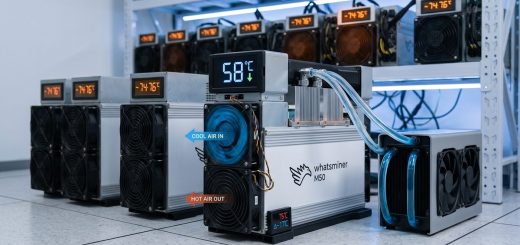
Is the Whatsminer M60 Worth the Premium Price Tag for Small-Scale Miners?
Thinking about adding a Whatsminer M60 to your mining setup? With its impressive hash rate and recent market buzz, it’s easy to get tempted. But before you make a purchase, understanding its true performance and profitability potential is key. This review breaks down what you need to know about the M60, how it stacks up against other miners, and whether it offers a solid return on investment for small-scale miners or hobbyists.
The Whatsminer M60 offers strong mining performance with high efficiency, making it attractive for small operators. However, its profitability depends on electricity costs, current crypto prices, and your hardware setup. Careful analysis is needed to determine if the premium price is justified for your specific situation. Overall, it can be a worthwhile investment if you focus on long-term gains and optimized operation strategies.
What makes the Whatsminer M60 stand out in the mining landscape?
The Whatsminer M60 has garnered attention due to its high hash rate and advanced hardware design. It delivers around 162 to 186 TH per second depending on the model and configuration. Powered by MicroBT’s latest chips, it promises improved efficiency and stability compared to older models. For small-scale miners, this translates into more potential earnings per watt of electricity consumed.
The M60 also features an integrated power supply unit (PSU), which simplifies setup and reduces compatibility issues. Its thermal design aims to keep noise levels manageable and maintain steady operation even in warm environments. But how well does it perform in real-world conditions? Let’s examine that next.
Analyzing performance and specifications
Key hardware features
| Specification | Details |
|---|---|
| Hashrate | 162 TH/s for standard, up to 186 TH/s for the high-performance variant |
| Power consumption | 18.5 J/TH (approximate) |
| Power supply | Built-in PSU for ease of setup |
| Cooling system | Air-cooled with multiple fans |
| Noise level | Moderate, suitable for dedicated mining spaces |
How does the M60 perform in real-world mining?
Many miners report that the M60 maintains stable hashrate levels over extended periods, with minimal downtime. Its efficiency is generally rated higher than older models like the S19 series, especially when operating at optimal temperatures. However, ambient temperature, power stability, and firmware settings can influence actual output.
Common pitfalls and mistakes
| Technique | Mistake to Avoid |
|---|---|
| Overclocking | Pushing the hardware beyond recommended specs can cause overheating and hardware failure |
| Poor ventilation | Insufficient cooling reduces efficiency and shortens lifespan |
| Ignoring firmware updates | Missing updates can lead to security vulnerabilities and missed performance improvements |
| Underestimating electricity costs | Overlooking power expenses can turn profitable setups into loss-making ventures |
Expert Tip: Always keep your firmware updated and monitor your ambient temperatures. Proper cooling extends the lifespan of your miner and maintains steady performance.
Is the Whatsminer M60 worth its premium price?
Pricing for the M60 varies depending on the seller, model version, and whether you buy new or used. New units might cost more but come with manufacturer support and warranty. Used models can be cheaper but require careful inspection for wear and tear.
Market value and purchasing strategies
- New vs. pre-owned: Decide based on your budget and risk tolerance.
- Timing your purchase: Prices tend to drop during off-peak seasons or when new models are announced.
- Bundles and discounts: Some suppliers offer package deals including power supplies, maintenance, or hosting services.
Profitability considerations
To evaluate whether the M60 makes sense financially, consider these steps:
- Calculate your expected daily revenue based on current Bitcoin or other coin prices.
- Subtract your electricity costs, factoring in your local rates.
- Include maintenance and potential downtime expenses.
- Use a profitability calculator to estimate when your investment will break even.
Practical tips for maximizing profitability
- Optimize your cooling setup to reduce electricity consumption.
- Join a reputable mining pool to stabilize earnings.
- Regularly update your firmware for improved efficiency.
- Keep an eye on market trends and crypto prices to time your sales for maximum profit.
How does the M60 compare to competitors?
When measuring the M60 against models like the Antminer S19 or newer Bitcoin miners, it often comes out ahead in terms of efficiency and stability. Its integrated PSU and proven reliability are big pluses for small operators.
| Comparison Point | Whatsminer M60 | Antminer S19 | Remarks |
|---|---|---|---|
| Hashrate | 162-186 TH/s | 95-110 TH/s | M60 offers higher hashrate |
| Power efficiency | 18.5 J/TH | 29-34 J/TH | M60 consumes less power per TH |
| Price | Higher upfront | Slightly cheaper | Consider long-term gains over initial cost |
| Support and reliability | Strong | Good | MicroBT’s reputation for durability |
Remember, an efficient miner can save you hundreds of dollars annually in electricity costs. Carefully evaluating efficiency can make or break your profitability.
Real-world reports from miners
Many small-scale operators highlight the M60’s stability and ease of use. They appreciate its lower noise profile compared to older models and its ability to run continuously with minimal issues. Some have noted that the initial investment pays off within a year if electricity costs are low and crypto prices stay stable.
Common concerns
- The premium price can be a barrier for newcomers.
- Proper cooling is essential to prevent overheating.
- Firmware updates are crucial for maintaining performance.
Final thoughts: is the Whatsminer M60 a smart choice?
For hobbyists and small miners willing to invest in a reliable, high-performance ASIC, the M60 can be a good fit. Its efficiency and stability support consistent earnings, especially when operating in a suitable environment. However, it’s important to carefully analyze your electricity rates and market conditions.
If you are considering this miner, check trusted suppliers and compare offers. Remember, hardware is only part of the equation—effective management and cooling practices can significantly influence your profitability.
Putting it all into perspective
Mining hardware like the Whatsminer M60 can offer excellent performance, but success depends on understanding your costs, environment, and market timing. Use tools like the https://microbt.tech/whatsminer-profitability-calculator-how-long-until-your-investment-breaks-even/ to project your potential earnings. By combining careful planning with solid hardware choices, you can build a mining operation that’s both profitable and sustainable.
Happy mining! Take the time to evaluate your setup, stay current with firmware updates, and always keep an eye on electricity costs. Your investment in hardware is only as good as your operational practices.