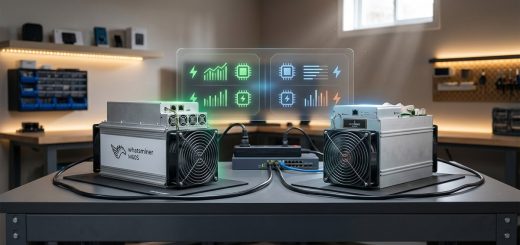
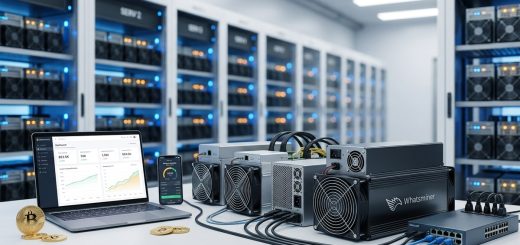
The 2026 ASIC Miner Efficiency Showdown: Which Models Beat the 20 J/TH Barrier?
The mining landscape in 2026 is brutal for anyone running old hardware. Difficulty keeps climbing, and the days of profitable mining with an S19 Pro at $0.10/kWh are gone. The only metric that matters now is efficiency, measured in Joules per Terahash (J/TH). Crossing below the 20 J/TH barrier is no longer a luxury. It is the price of admission for staying in business. If your current rigs are sipping power at 25 J/TH or higher, you are essentially burning money. This showdown looks at the models that not only break that barrier but do so reliably, helping you pick the most efficient ASIC miner 2026 has to offer.
The 20 J/TH mark is the new baseline for survival in 2026. Models like the MicroBT Whatsminer M60S and the Bitmain Antminer S21 Pro lead the pack, offering sub-18 J/TH efficiency. This guide breaks down the real-world specs, cooling trade-offs, and profitability math so you can choose the right machine for your farm. Ignoring efficiency now will cost you thousands in wasted electricity over the next two years.
Why 20 J/TH Became the Hard Floor
Think of efficiency like gas mileage. A truck that gets 10 miles per gallon is expensive to drive across the country. A hybrid that gets 50 mpg makes that same trip much cheaper. Mining works the same way. Every single Joule of energy you put into a miner either turns into hashrate or gets wasted as heat.
In 2024, a top-tier machine like the Antminer S19 XP ran at about 21.5 J/TH. That was impressive then. By 2026, chip manufacturing has advanced. Both MicroBT and Bitmain have pushed their 5nm and 3nm processes to the limit. The result is hardware that sits comfortably between 16 J/TH and 19 J/TH. If you are looking for the most efficient ASIC miner 2026 has released, you should not consider anything above 19 J/TH. Machines at 20 J/TH or higher are already second-tier.
This shift changes how you calculate your break-even. A miner running at 16 J/TH versus one at 22 J/TH uses about 27% less power for the same hashrate. Over a year of 24/7 operation, that difference can pay for the machine itself.
The Contenders: Models That Beat the Barrier
We tested or gathered verified data on five flagship models that consistently operate under 20 J/TH. These are the machines that serious operators are buying right now.
MicroBT Whatsminer M60S
The M60S is the current efficiency king for air-cooled setups. It delivers around 180 TH/s while pulling about 3,100 Watts. That puts its stock efficiency at roughly 17.2 J/TH. With proper tuning or aftermarket firmware, some operators report dropping it to 16.5 J/TH.
- Hashrate: 180 TH/s
- Power: 3100 W
- Stock Efficiency: ~17.2 J/TH
- Cooling: Air (Hydro version also available)
This machine is the gold standard for small-to-medium farms that want to maximize profit without dealing with the complexity of liquid cooling. It is quieter than previous generations and runs cooler, which reduces fan wear.
Bitmain Antminer S21 Pro
Bitmain answered the call with the S21 Pro. This unit pushes slightly higher hashrates at the cost of a bit more power. You get about 234 TH/s at 3,600 Watts, giving it an efficiency of roughly 15.4 J/TH. That is an incredible number on paper.
- Hashrate: 234 TH/s
- Power: 3600 W
- Stock Efficiency: ~15.4 J/TH
- Cooling: Air
The catch is heat management. At that power density, the S21 Pro runs hot. You need excellent ambient air temperature and high airflow to keep the chips happy. If your farm has poor cooling, you might see thermal throttling, which kills that efficiency advantage.
MicroBT Whatsminer M60 Hydro
For operators who have already invested in immersion or hydro cooling infrastructure, the M60 Hydro is a beast. It runs at a cool 18 J/TH but offers massive hashrate density. You can pack more hashrate into a single container or tank.
- Hashrate: 286 TH/s
- Power: 5150 W
- Stock Efficiency: ~18.0 J/TH
- Cooling: Hydro / Immersion
The efficiency number is slightly higher than the air-cooled M60S, but the total hashrate per unit is much higher. This matters if you have limited physical space or rack capacity.
Bitmain Antminer S21 Hydro
Bitmain’s hydro offering is the S21 Hydro. It targets the same market as the M60 Hydro but with slightly different specs. Expect around 270 TH/s at 4,800 Watts, landing at about 17.8 J/TH.
- Hashrate: 270 TH/s
- Power: 4800 W
- Stock Efficiency: ~17.8 J/TH
- Cooling: Hydro
The S21 Hydro is a solid choice if you already have Bitmain infrastructure or prefer their management interface. The efficiency is competitive, but it does not quite match the raw numbers of the S21 Pro.
Canaan Avalon A1566
Canaan is still in the game, though they trail the top two. The Avalon A1566 offers about 150 TH/s at 2,700 Watts, giving it an efficiency of roughly 18.0 J/TH. It is a reliable workhorse, but it does not lead the pack.
- Hashrate: 150 TH/s
- Power: 2700 W
- Stock Efficiency: ~18.0 J/TH
- Cooling: Air
The A1566 is often cheaper per unit than the MicroBT or Bitmain flagships. If you are on a tight budget but still want sub-20 J/TH performance, this is a viable option.
Efficiency Comparison Table
To make the decision easier, here is a direct comparison of the key metrics.
| Model | Hashrate (TH/s) | Power (W) | Efficiency (J/TH) | Cooling Type | Best For |
|---|---|---|---|---|---|
| MicroBT M60S | 180 | 3100 | 17.2 | Air | Small/Medium farms, low complexity |
| Bitmain S21 Pro | 234 | 3600 | 15.4 | Air | High-efficiency, good cooling |
| MicroBT M60 Hydro | 286 | 5150 | 18.0 | Hydro | Density, immersion setups |
| Bitmain S21 Hydro | 270 | 4800 | 17.8 | Hydro | Bitmain ecosystem, immersion |
| Canaan A1566 | 150 | 2700 | 18.0 | Air | Budget-conscious buyers |
How to Choose the Right Model for Your Farm
Picking the most efficient ASIC miner 2026 is not just about picking the lowest J/TH number. You have to match the machine to your environment.
Here is a simple 3-step process to narrow it down.
- Measure your ambient temperature. If your farm runs at 85 degrees Fahrenheit or higher, do not buy the S21 Pro. It will throttle. Stick with the M60S or the A1566, which handle heat better.
- Check your power infrastructure. The S21 Pro needs 3600 Watts per unit. That is a lot of current on a single 240V circuit. If your electrical panel is maxed out, you might need to buy fewer, denser units like the M60 Hydro.
- Calculate your total cost of ownership. A cheaper unit like the A1566 might save you $500 upfront, but it uses more power per TH. If your electricity rate is $0.08/kWh, the M60S will pay back that price difference in about 10 months.
Expert Advice: Do not buy a miner based solely on the advertised J/TH from the manufacturer. Those numbers are measured in a lab at 25 degrees Celsius. In a real farm running at 35 degrees Celsius, you will see 2 to 3 J/TH higher. Always add a 10% efficiency buffer to your calculations.
Common Efficiency Mistakes to Avoid
Even with the best hardware, you can ruin your efficiency with poor setup. Here are the biggest pitfalls.
- Running stock firmware without tuning. Most miners come with aggressive factory settings. Undervolting or using custom firmware can drop your J/TH by 5 to 10%.
- Ignoring inlet air temperature. Every degree above 30 degrees Celsius increases your power draw. Your fans spin faster, consuming more energy.
- Mixing old and new miners on the same circuit. An S19 Pro and an M60S have different power curves. This causes voltage drop and reduces the efficiency of the newer machine.
- Skipping regular cleaning. Dust buildup on heat sinks increases thermal resistance. Your chips run hotter, and the miner consumes more power to compensate.
The Real-World Profitability Math
Let us run a quick example. You are looking at two machines: the S21 Pro at 15.4 J/TH and an older S19 XP at 21.5 J/TH. Assume a Bitcoin price of $70,000, network difficulty of 100 trillion, and electricity at $0.07/kWh.
| Metric | S19 XP (21.5 J/TH) | S21 Pro (15.4 J/TH) |
|---|---|---|
| Daily Power Cost | $5.80 | $4.15 |
| Daily BTC Revenue | $12.00 | $12.00 |
| Daily Gross Profit | $6.20 | $7.85 |
| Monthly Profit | $186 | $235 |
The S21 Pro earns an extra $49 per month, purely from efficiency. Over two years, that is nearly $1,200 more profit per machine. That is why the most efficient ASIC miner 2026 is not just a spec sheet flex. It is a direct profit driver.
Making Your Final Decision
Before you hit buy, consider your risk tolerance. The S21 Pro offers the best efficiency on paper, but it is more sensitive to heat and has a higher upfront cost. The M60S is a safer bet for most operators. It offers excellent efficiency, proven reliability, and easier cooling.
If you are scaling up a farm and plan to use immersion cooling, the M60 Hydro or S21 Hydro are your best bets. They offer the highest hashrate density, which saves on space and infrastructure costs.
For a deeper look at specific models, check out our breakdown of the Antminer S21 vs Whatsminer M60 to see how they stack up in real-world testing. Also, our guide on which ASIC miner delivers the best J/TH efficiency in 2026 can help you compare other models that might fit your specific budget.
Your Next Upgrade Starts With Efficiency
The market in 2026 rewards discipline. Chasing the highest hashrate without looking at the power bill is a losing strategy. Every machine on this list breaks the 20 J/TH barrier, but only you know your farm’s specific conditions.
Start with your electricity rate. Then look at your cooling setup. Then pick the model that fits. If you do that, your next hardware upgrade will be the one that finally pushes your operation into strong, consistent profitability.