The Hidden Costs of Running a Whatsminer M50 vs. M60: Which Model Saves You More in 2026?
If you are comparing the Whatsminer M50 and M60, you already know the sticker price is just the beginning. The real question is how much each machine will cost you to run over the next two or three years. Electricity rates are climbing across the United States, and every joule per terahash matters more now than it did in 2024. The M50 has been a workhorse for years, but the M60 promises better efficiency. Which one actually saves you more money in the long run? Let’s break down the hidden costs that most buyers overlook.
The Whatsminer M60 typically saves 10-15% on electricity costs compared to the M50 due to its superior J/TH efficiency, but the higher upfront price and more complex cooling needs can eat into those savings. For miners paying over $0.08/kWh, the M60 usually breaks even within 14 months. For those with cheaper power, the M50 still offers a solid path to profitability.
Why the Sticker Price Is Only Half the Story
Most people look at the initial purchase price and call it a day. The M50 is cheaper to buy on the used market, often by several hundred dollars. That feels like a win. But the M50 draws more power to produce the same amount of work. Over a year of 24/7 operation, that difference adds up to real money.
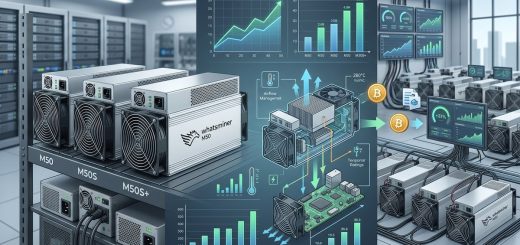
The M50 runs at about 3400W and delivers around 112 TH/s. The M60, depending on the firmware and cooling setup, runs closer to 3600W but pushes 130 TH/s. That is a big jump in hashrate for only a small increase in power draw. The efficiency gap between the two models is where the math gets interesting.
Let’s look at the raw numbers side by side.
| Model | Power Draw (W) | Hashrate (TH/s) | Efficiency (J/TH) |
|---|---|---|---|
| Whatsminer M50 | 3400 | 112 | 30.4 |
| Whatsminer M60 | 3600 | 130 | 27.7 |
The M60 uses 2.7 fewer joules for every terahash it solves. That might not sound like much, but at scale, it is the difference between profit and loss.
The Electricity Cost Gap
Let’s put real numbers on this. If you pay the national average of $0.12/kWh, here is what one year of operation looks like.
- M50 annual electricity cost: 3400W x 24 hours x 365 days / 1000 x $0.12 = $3,574
- M60 annual electricity cost: 3600W x 24 hours x 365 days / 1000 x $0.12 = $3,785
Wait, the M60 costs more? Yes, but it also produces more hashrate. You need to compare cost per terahash, not total power bill.
- M50 cost per TH per year: $3,574 / 112 TH = $31.91
- M60 cost per TH per year: $3,785 / 130 TH = $29.12
The M60 saves you about $2.79 per TH each year. If you run 10 M60 units instead of 10 M50 units, that is a saving of over $3,600 annually. For a farm with 100 units, the savings jump to more than $36,000 per year.
Maintenance and Component Wear
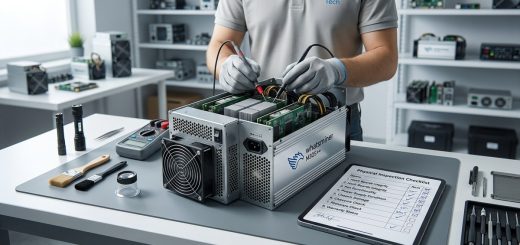
Electricity is the biggest cost, but it is not the only one. The M50 has been on the market longer, which means replacement parts are easier to find and cheaper. Hashboards for the M50 are widely available, and many repair shops know the board layout by heart.
The M60 uses newer chips that run hotter. Higher density means more heat per square inch. That heat stresses fans, power supplies, and thermal paste. You will likely replace fans on an M60 sooner than on an M50.
Here is a list of maintenance items you should budget for with each model.
- M50:
- Fan replacements every 18 to 24 months
- Power supply units are standard and easy to swap
-
Thermal paste degradation is slower due to lower operating temps
-
M60:
- Fan replacements every 12 to 18 months
- Power supply units are higher wattage and cost more to replace
- Thermal paste needs reapplication more often, especially in warm climates
Cooling Infrastructure Costs
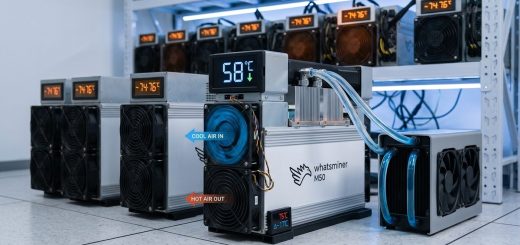
The M60 runs hotter. If you are deploying in a garage or a small space, you might get away with standard fans for the M50. The M60 often requires upgraded airflow or even immersion cooling to stay at optimal temperatures.
Immersion cooling adds a significant upfront cost. You are looking at $500 to $1,000 per unit for a good immersion setup. That can wipe out your electricity savings for the first year.
But if you already have immersion cooling, the M60 performs beautifully. The lower junction temperatures in an immersion bath let the M60 sustain its peak hashrate longer without thermal throttling.
What About Resale Value?
The M50 has been around long enough that its resale value has stabilized. You can buy a used M50 for around $1,200 to $1,600 depending on condition. The M60 still holds a premium, often selling for $2,200 to $2,800 used.
If you plan to upgrade in two years, the M60 will lose more absolute value, but it will lose a smaller percentage. The M50 is closer to the bottom of its depreciation curve. The M60 still has room to fall.
Expert advice: If you plan to hold your hardware for more than three years, the M60’s efficiency advantage will more than cover the depreciation hit. If you flip hardware every year, stick with the M50.
How to Calculate Your Break-Even Point
You need to find the point where the M60’s higher upfront cost is offset by lower operating costs. Here is a simple process.
-
Find the price difference. Subtract the cost of an M50 from the cost of an M60. Let’s say $2,500 for the M60 and $1,500 for the M50. The difference is $1,000.
-
Calculate annual electricity savings. Use the cost per TH numbers from earlier. At $0.12/kWh, the M60 saves $2.79 per TH per year. If you run one unit at 130 TH, your annual saving is $362.
-
Divide the price difference by the annual saving. $1,000 / $362 = 2.76 years. That is your break-even point.
If your electricity rate is higher, the break-even comes faster. At $0.15/kWh, the break-even drops to about 2.2 years. At $0.07/kWh, it stretches past 4 years, and the M50 becomes the better choice.
Hidden Costs That Nobody Mentions
There are a few expenses that do not show up in the spec sheets.
-
Noise penalties. The M60’s higher fan speeds create more noise. If you are mining in a residential area, noise complaints can lead to fines or forced shutdowns. Soundproofing costs money. The M50 is noticeably quieter.
-
Power infrastructure. The M60 draws more peak current. You might need to upgrade your electrical panel or add a dedicated circuit. That can cost hundreds or thousands depending on your setup.
-
Shipping and handling. The M60 is heavier and more delicate. Shipping costs more, and damage during transit is more common. Factor in a higher insurance cost if you buy new.
Which Model Wins for Different Scenarios?
Your choice depends on your specific situation.
-
You pay $0.10/kWh or more: The M60 is the clear winner. The efficiency gains will pay off within two years, and the extra hashrate means more coins in your wallet.
-
You pay less than $0.08/kWh: The M50 is a better value. The lower purchase price and cheaper maintenance make it the smarter choice. You will not save enough on electricity to justify the M60 premium.
-
You are scaling a large farm (50+ units): The M60 makes sense even at moderate electricity rates. The cumulative savings on power and the higher density per square foot of floor space add up to significant operational savings.
-
You are a hobbyist with one or two units: The M50 is safer. The parts are cheaper, the cooling is easier, and you can find help online if something breaks. The M60 is a professional machine that expects professional infrastructure.
Making the Final Decision
The Whatsminer M50 and M60 are both excellent machines. The M50 is a proven veteran that still turns a profit in 2026, especially if you find a good deal on a used unit. The M60 is the future, with better efficiency and higher hashrate density.
Do not just look at the upfront price. Run the numbers for your specific electricity rate, your cooling setup, and your maintenance budget. If you want a deeper look at how each model performs under real-world conditions, check out our Whatsminer M50 Series Complete Breakdown: Performance Testing and Real-World Results. For a broader view of which ASIC delivers the best efficiency in 2026, read our guide on Which ASIC Miner Delivers the Best J/TH Efficiency in 2026?
Planning Your Next Hardware Purchase
The mining landscape changes faster than most industries. What worked last year might not work next year. The M50 and M60 both have strong communities and good support from MicroBT. Whichever you choose, make sure you have a plan for power management, cooling, and maintenance.
If you are still on the fence, try running a Whatsminer Profitability Calculator: How Long Until Your Investment Breaks Even? with your actual numbers. That will give you a clear answer based on your electricity rate and hardware costs.
The best miner is the one that makes you money after all the bills are paid. Run the math, trust the data, and pick the model that fits your operation. Your wallet will thank you.