7 ASIC Miners That Still Turn a Profit at $0.10/kWh in 2026
If you are paying around $0.10 per kilowatt-hour for electricity, you already know the margins in Bitcoin mining can feel tight. The good news is that 2026 is not 2023. Hardware efficiency has jumped significantly, and several ASIC models still generate real profits even at this residential or small-business power rate. You just need to pick the right machine. Let's look at seven ASIC miners that earn their keep at $0.10/kWh this year.
Bitcoin mining at $0.10/kWh in 2026 demands hardware that delivers at least 25 J/TH efficiency. We break down 7 ASIC miners that meet this threshold, including the Antminer S21 series, Whatsminer M60 series, and specialized Scrypt miners. You get real hashrate specs, power draw data, and estimated daily profits. Use this guide to find a machine that fits your budget and keeps your operation in the green.
Why $0.10/kWh Is the Make or Break Line in 2026
The 2024 halving cut block rewards in half. That means every joule of energy has to work harder for you. If you are paying $0.10/kWh, you need hardware running at 25 J/TH or better to see any bottom-line profit. Anything less efficient than that, and your electricity bill will eat your Bitcoin revenue before you even cover costs.
This threshold has pushed older miners like the S19 series into the red for most home operators. But it has also created a clear dividing line. The machines listed below are the ones that still make financial sense today. If you want to understand the math behind these numbers, check out our guide on Which ASIC Miner Delivers the Best J/TH Efficiency in 2026?
The 7 Profitable ASIC Miners for 2026
Here is a side-by-side comparison of the top models. These estimates assume a Bitcoin price of $70,000 and a network difficulty of 600 EH/s. Your actual results will vary, but this gives you a solid starting point.
| Model | Algorithm | Hashrate | Power Draw | Efficiency | Est. Daily Profit |
|---|---|---|---|---|---|
| Bitmain Antminer S21 Pro | SHA-256 | 234 TH/s | 3500 W | 15.0 J/TH | $3.85 |
| MicroBT Whatsminer M60S | SHA-256 | 176 TH/s | 3370 W | 19.1 J/TH | $1.15 |
| Bitmain Antminer S21 | SHA-256 | 200 TH/s | 3500 W | 17.5 J/TH | $2.10 |
| MicroBT Whatsminer M60 | SHA-256 | 150 TH/s | 2775 W | 18.5 J/TH | $1.20 |
| MicroBT Whatsminer M50S | SHA-256 | 126 TH/s | 3276 W | 26.0 J/TH | $0.30 |
| Bitmain Antminer L7 | Scrypt | 9.16 GH/s | 3425 W | 0.37 J/MH | $2.50* |
| Goldshell Mini-DOGE Pro | Scrypt | 2.2 GH/s | 2200 W | 1.0 J/MH | $0.75* |
*Scrypt mining includes merged mining revenue from Litecoin and Dogecoin.
Let's break down each machine so you can see which one fits your situation.
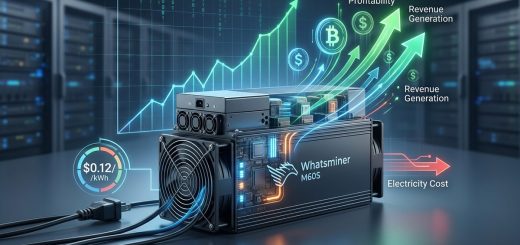
MicroBT Whatsminer M60S (176 TH/s)
The M60S is a workhorse. At 19.1 J/TH, it sits comfortably in the efficiency zone needed for $0.10 power. It pulls 3370 watts, which means you can run one on a standard 15-amp circuit with some headroom. The build quality is excellent, and MicroBT's firmware is stable out of the box. This is a great option if you want a reliable miner that won't give you headaches. For a closer look at how it stacks up against the competition, read our Whatsminer M60S vs Antminer S19 XP: Which Wins for Home Mining? article.
Bitmain Antminer S21 Pro (234 TH/s)
This is the efficiency king as of early 2026. With 15 J/TH, it gives you the most breathing room against price swings. The S21 Pro earns about $3.85 per day after power costs at $0.10/kWh. That is the highest raw profit on this list. The downside is the upfront cost. This machine commands a premium price. But if you have the capital, it pays itself back faster than any other model right now.
Bitmain Antminer S21 (200 TH/s)
The standard S21 is a slightly lower hashrate than the Pro model, but it still delivers outstanding efficiency at 17.5 J/TH. It earns around $2.10 per day after electricity. This is a solid middle-ground choice. You get the same power architecture as the Pro but at a lower entry price. Many miners consider this the sweet spot for value in 2026.
MicroBT Whatsminer M60 (150 TH/s)
The M60 is perfect for home miners who are limited by circuit breaker capacity. It draws only 2775 watts. That is low enough that you can plug it into a standard 15-amp circuit without worrying about tripping the breaker. The daily profit is around $1.20. It is not the biggest earner, but it is one of the easiest to deploy for a solo operator.
MicroBT Whatsminer M50S (126 TH/s)
This is the budget-friendly entry point that still makes sense in 2026. At 26 J/TH, it is right at the edge of our efficiency cutoff. It earns about $0.30 per day after power. That is not a lot, but it is still positive. If you find a good deal on a used M50S, it can be a low-risk way to get started. Just keep in mind that its resale value will drop faster than newer hardware.
Bitmain Antminer L7 (9.16 Gh/s)
If you want to mine Litecoin and Dogecoin, the L7 is the gold standard. Scrypt mining with merge mining profits can be a solid hedge. The L7 earns roughly $2.50 per day after power costs when you factor in merged mining revenue. It is loud and power-hungry, but it is the most proven Scrypt miner on the market.
Goldshell Mini-DOGE Pro (2.2 Gh/s)
The Mini-DOGE Pro is quiet enough for a garage or basement. It won't make you rich, but it provides steady Scrypt income. At $0.75 per day, it is more of a hobbyist machine. The appeal here is the low noise and lower power draw. If you want to test the waters of Scrypt mining without a massive investment, this is your machine.
How to Run Your Own Profitability Numbers
A table gives you a snapshot, but your specific situation might be different. Here is a simple process to calculate your own numbers:
- Find a reliable calculator like WhatToMine or use our dedicated tool.
- Input your exact power cost. If you are reading this, that number is $0.10/kWh.
- Add your pool fees. Most pools charge between 1% and 4%.
- Account for downtime. A good rule of thumb is to subtract 5% for maintenance and reboots.
- Amortize the hardware cost. Divide the purchase price by its expected lifespan (usually 3 to 5 years for modern ASICs).
This gives you a true picture of your return on investment. For a deeper walkthrough, see our guide on How to Calculate Your True Mining Profitability Beyond the Basic Numbers.
Why Efficiency (J/TH) Matters More Than Raw Hashrate
It is tempting to buy the miner with the highest hashrate. But at $0.10/kWh, efficiency is the real king. A lower J/TH rating means less heat, less noise, and more money in your pocket.
- Lower power bills mean less financial stress during BTC price dips.
- Less heat output saves on cooling costs and extends hardware lifespan.
- Higher efficiency hardware retains resale value better when you decide to upgrade.
"In 2026, the difference between a 25 J/TH and a 15 J/TH miner at $0.10/kWh is the difference between breaking even and building real wealth. Efficiency is the only metric that truly matters for long-term success." - MicroBT Tech Hub Senior Analyst
Common Mistakes That Eat Into Your Margins
Even with the best hardware, small errors can wipe out your profits. Here is a table of the most common mistakes and how to avoid them.
| Mistake | Why It Hurts | How to Fix It |
|---|---|---|
| Ignoring firmware updates | Stock firmware can be 5-10% less efficient | Use reputable custom firmware or update officially |
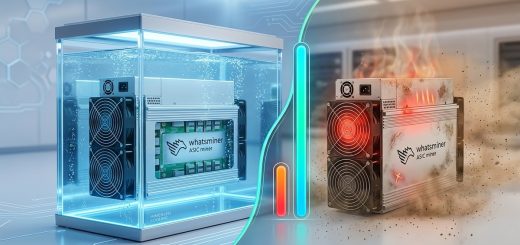
| Poor ventilation | High temps increase resistance and power draw | Set up proper intake/exhaust or use immersion cooling |
| Skipping PSU quality checks | Cheap PSUs fail, causing downtime and potential damage | Invest in a high-efficiency 80+ Platinum PSU |
| Not accounting for tax | Mining income is taxable. Uncle Sam takes a cut | Set aside 30% of profits for tax season |
Avoiding these pitfalls will keep your operation running smoothly. For a full list of things to watch out for, read our article on 7 Critical Mistakes to Avoid When Deploying Your First Whatsminer Rig.
Choosing the Right ASIC for Your Setup
There is no single best ASIC miner for everyone in 2026. The right choice depends on your budget, your power limit, and your risk tolerance.
If you have the capital, the Antminer S21 Pro is the clear efficiency winner. It earns the most and gives you the best protection against future difficulty increases.
If you need a lower entry price, a used Whatsminer M50S can still do the job. Just be realistic about its limited upside.
If you are limited by your home's electrical panel, the Whatsminer M60 or the Goldshell Mini-DOGE Pro might be your best bet.
Take your time. Run the numbers. And if you get stuck, our Break-Even Analysis for Whatsminer M60 Series can help you decide.
Happy mining, and may your shares be found.