How to Retrofit Legacy Mining Facilities for 2026 Efficiency Standards
If you manage a mining facility built five or six years ago, you already know the pressure is building. The equipment that once ran like a champion now struggles to keep up. Power costs are climbing. Hashrate per watt is dropping. And the 2026 efficiency standards are not a suggestion. They are a requirement that will separate profitable operations from the ones that get left behind.
The good news? You do not need to tear everything down and start from scratch. Retrofitting a legacy facility is often smarter than building new. It saves capital. It reuses existing infrastructure. And with the right plan, you can hit those 2026 targets without losing your shirt.
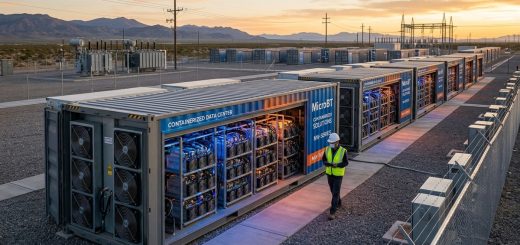
Retrofitting a legacy mining facility for 2026 efficiency standards is a three step process: swap outdated ASICs for modern models like the Whatsminer M60S, upgrade your cooling system to handle higher density, and rewire your power distribution to reduce line losses. Each step pays for itself within 12 to 18 months at current electricity rates.
Where Most Legacy Facilities Lose Efficiency
Let us look at the three biggest drains on older mining operations. If you solve these, you solve most of the problem.
Power supply losses. Many facilities from the 2020 to 2022 era still run on older PSUs that operate at 80 to 85 percent efficiency. Modern power supplies hit 94 to 96 percent. That difference alone can save you thousands of dollars per month on a medium sized farm.
Aging ASIC hardware. The S19 series and early Whatsminer M30 models are workhorses, but they cannot match the joules per terahash of newer gear. A Whatsminer M60S, for example, delivers nearly double the hashrate per watt compared to an S19 Pro. Keeping old hardware online is like driving a truck that gets 8 miles per gallon when a newer model gets 18.
Cooling inefficiency. Legacy facilities often rely on basic air handling or swamp coolers. These systems struggle to maintain the optimal temperature range for ASIC miners, which causes thermal throttling and reduced lifespan. Hot spots develop. Fans run at full speed constantly. Your power bill goes up and your hardware wears out faster.
The Three Phase Retrofit Plan
Here is the process we recommend for any facility manager facing the 2026 standards. It is a numbered sequence that works for operations of almost any size.
-
Audit your current baseline. Before you change anything, measure your actual power usage, hashrate, and temperature per rack. Use a power meter at the distribution panel. Log data for at least two weeks. This gives you a real baseline, not a guess.
-
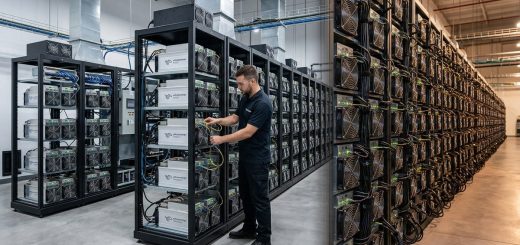
Swap ASICs in phases. Replace the oldest 20 percent of your units first. Put the new hardware on a separate circuit so you can compare performance directly against the old machines. Adjust your cooling and power distribution as you go. This phased approach reduces risk and lets you see real world ROI before committing to the full swap.
-
Upgrade supporting infrastructure last. Once the new ASICs are in place, optimize the cooling system and power distribution to match. This order matters because the new hardware often runs cooler and at different voltages than the old gear. You might find that your existing cooling is sufficient once you swap out the hot running legacy units.
Hardware Choices That Make or Break Your Retrofit
Not all ASIC miners are created equal when it comes to retrofitting. You need models that balance high efficiency with reliability in a facility that may have less than ideal airflow or older electrical panels.
| Hardware Focus Area | Best Approach for Legacy Facilities | Common Mistake |
|---|---|---|
| ASIC Miner Selection | Choose models with J/TH under 25, like the Whatsminer M60S or Antminer S21. | Buying used S19 units because they are cheap. They will not meet 2026 standards. |
| Power Supply Units | Upgrade to 94%+ efficient PSUs. Match voltage to your existing panel. | Using mismatched PSUs that require new electrical runs. |
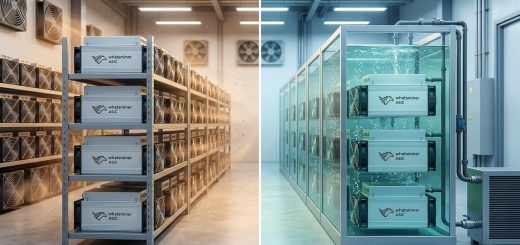
| Cooling System | Add spot cooling or immersion loops for high density racks. | Overcooling the entire room instead of targeting hot spots. |
| Firmware Tuning | Use undervolting profiles to lower power draw without cutting hashrate. | Running stock firmware that prioritizes speed over efficiency. |
| Monitoring Software | Deploy real time power and temperature tracking per unit. | Relying on manual checks that miss gradual efficiency drift. |
If you want to compare specific models side by side, our guide on which ASIC miner delivers the best J/TH efficiency in 2026 breaks down the numbers for the top contenders.
Cooling Upgrades That Actually Pay Off
Cooling is the silent profit killer in legacy facilities. Many operators think they need to rip out their entire HVAC system. That is rarely true.
Instead, focus on these targeted improvements:
- Install variable speed fans on your exhaust side. They adjust airflow based on actual temperature, not just a fixed schedule.
- Use containment. Simple plastic curtains or panels that separate hot aisles from cold aisles can drop intake temperatures by 5 to 8 degrees Fahrenheit.
- Add liquid cooling loops for the hottest racks. You do not need to convert the whole facility. Just the rows that run the most power hungry ASICs.
For readers who want to go further into cooling, our article on immersion cooling vs air cooling covers the ROI math for both approaches.
Power Distribution: The Hidden Efficiency Leak
Most legacy facilities were wired for older hardware that drew lower amperage per rack. When you install modern ASICs, you might find that your existing breakers and wiring are undersized. This creates voltage drop, which wastes power as heat.
Here is what to check:
- Wire gauge. Older runs of 10 AWG or thinner may not handle the load of modern miners. Upgrade to 8 AWG or 6 AWG for long runs.
- Breaker ratings. Ensure your panel breakers match the actual draw of your new hardware, not the old.
- Phase balancing. If your facility runs three phase power, check that you have balanced the load across all three legs. An unbalanced system wastes 3 to 5 percent of your power.
Expert advice: Do not trust the nameplate ratings on your old PDU. Measure actual draw with a clamp meter. I have seen facilities where the nameplate said 30 amps but the actual draw was 38. That is a fire hazard waiting to happen.
Common Mistakes That Derail Retrofit Projects
Even experienced operators make these errors. Avoid them and your retrofit will go much smoother.
- Skipping the baseline audit. Without real data, you are guessing at what needs to change.
- Buying the cheapest ASICs available. Low upfront cost often means high operating cost. A model like the Whatsminer M60S stays profitable even at twelve cents per kilowatt hour.
- Ignoring firmware optimization. Stock settings are rarely tuned for efficiency. A simple undervolt can cut power use by 15 percent with no hashrate loss.
- Overcooling the entire room. You pay to cool air that never touches your hardware. Target the hot spots instead.
For a full list of pitfalls, check our piece on 7 critical mistakes to avoid when deploying your first Whatsminer rig. The lessons apply to retrofits too.
Calculating Your Payback Period
Every retrofit decision comes down to one question: how long until this pays for itself? Here is a simple formula you can use.
Take the total cost of the upgrade. Divide it by your monthly savings in electricity. That gives you the payback period in months.
For example, swapping 100 older ASICs for modern units might cost $80,000. If your power savings are $6,000 per month, your payback is about 13 months. After that, every month is pure profit.
But remember to factor in downtime during the swap. Plan your phased rollout during periods of lower mining difficulty or lower electricity prices if your utility has time of use rates.
Putting It All Together
Retrofitting a legacy mining facility for 2026 efficiency standards is not a mystery. It is a straightforward process of swapping old hardware for new, tuning your cooling, and fixing your power distribution. The numbers work. The technology exists. And the deadline is real.
Start with an honest audit. Then move to the phased swap. Do not try to do everything at once. Each phase teaches you something that makes the next phase easier.
If you need help deciding which ASIC models will give you the best return, we have a detailed breakdown of the top MicroBT Whatsminer models for maximizing ROI in 2026. That guide pairs perfectly with this retrofit plan.
Your Next Step Toward a Compliant Facility
You have the roadmap. Now it is time to walk it. Pick a single rack or a single row. Run the numbers. Execute phase one. Measure the results. Then scale from there.
The 2026 standards are not something to fear. They are a signal that the industry is maturing. Facilities that adapt will run leaner, quieter, and more profitably. Those that do not will find themselves priced out of the market.
You already know which side you want to be on. Go make it happen.